

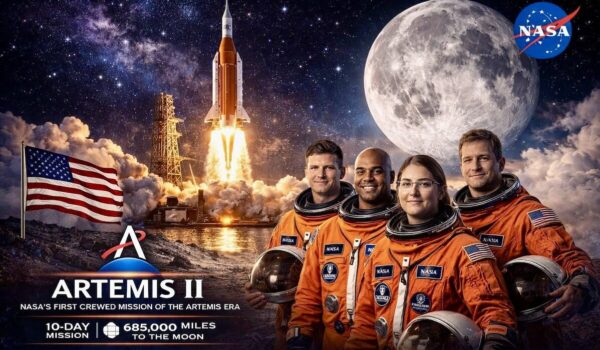
For the first time in over 50 years, humans are heading back toward the Moon—and you can watch it LIVE right here – Artemis II Launch, Live Feed and Live Coverage!
NASA’s Artemis II mission marks a historic milestone in aviation and space exploration, sending four astronauts on a journey around the Moon aboard the powerful Space Launch System (SLS) rocket.
🎥 Watch the Artemis II Live Coverage (Includes Live Stream Onboard Orion when Available)
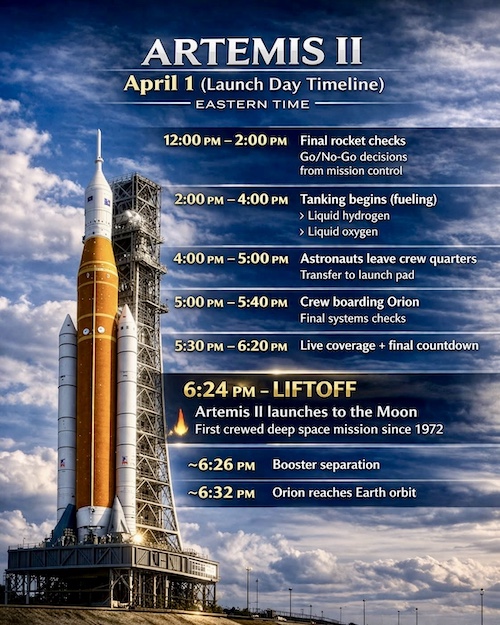
NASA (Official Broadcast): This feed provides continuous coverage of Artemis II mission activities with live commentary, beginning with tanking of the SLS (Space Launch System) rocket at NASA’s Kennedy Space Center and concluding with the recovery of the Orion Integrity Spacecraft after splashdown.
Live coverage of Artemis II’s launch and lunar flyby, as well as daily mission briefings, will also stream on this feed.
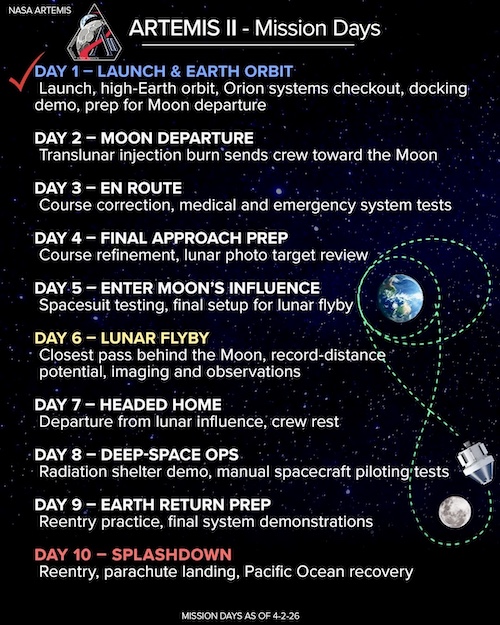
After launching into space atop SLS, the crew will journey around the Moon and back in their Orion Spacecraft on a 10-day mission. Artemis II will be the first crewed flight test of SLS and Orion, testing the technologies we’ll need for long-term lunar exploration and human missions to Mars.
🎥 Watch the Artemis II Launch — T-34 to T+14
👉 Watch NASA Launch Four Humans To The Moon | Artemis II Launch (Replay)
🌕 What is Artemis II?
Artemis II is NASA’s first crewed lunar mission since Apollo 17 in 1972.
This mission will:
- Send 4 astronauts around the Moon
- Travel over 685,000 miles total
- Last approximately 10 days
- Reach the farthest distance humans have ever traveled in space
Unlike Apollo missions, Artemis II is focused on testing systems, safety, and deep-space operations—laying the groundwork for future lunar landings.
Artemis II is the mission, Orion and Integrity both apply to the Artemis II crew module. Orion is the official name of the spacecraft type and program, while Integrity is the specific call sign chosen by the crew for the capsule flying the Artemis II mission. The crew named it “Integrity” to represent the trust and teamwork involved in the mission.
- Orion (Spacecraft Type): Developed by Lockheed Martin and NASA, it is the crew capsule designed for deep-space missions.
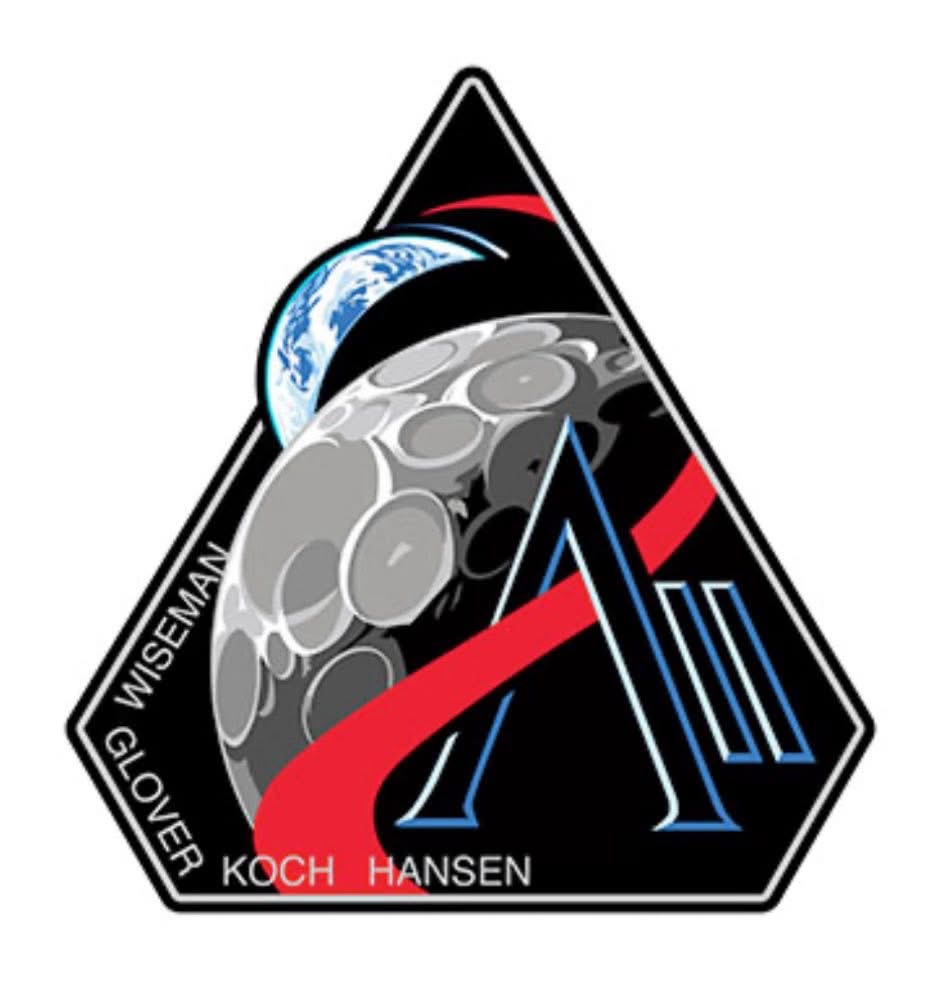
- Integrity (Individual Capsule Name): Chosen by astronauts Reid Wiseman, Victor Glover, Christina Koch, and Jeremy Hansen to represent the foundational values of their mission.
- Mission Significance: Integrity is the first crewed Orion capsule to fly around the Moon, with the mission aiming to return humans to lunar orbit for the first time since 1972.
The crew announced the name on September 24, 2025, emphasizing that it symbolizes the immense effort required from technicians, scientists, and partners across the globe
👨🚀 Meet the Artemis II Crew
This mission represents a major step forward—not just technologically, but historically. Four astronauts — three from NASA and one from the CSA (Canadian Space Agency) — make up the Artemis II crew:
- NASA astronaut Reid Wiseman, Artemis II commander Wiseman (Commander)
- NASA astronaut Victor Glover, Artemis II pilot
- NASA astronaut Christina Koch, Artemis II mission specialist
- Canadian Space Agency (CSA) astronaut Jeremy Hansen, Artemis II mission specialist
🚀 Artemis II Rocket Specs: Size, Power & What Makes It Incredible
If you think modern aviation is impressive… wait until you see what’s powering Artemis II.
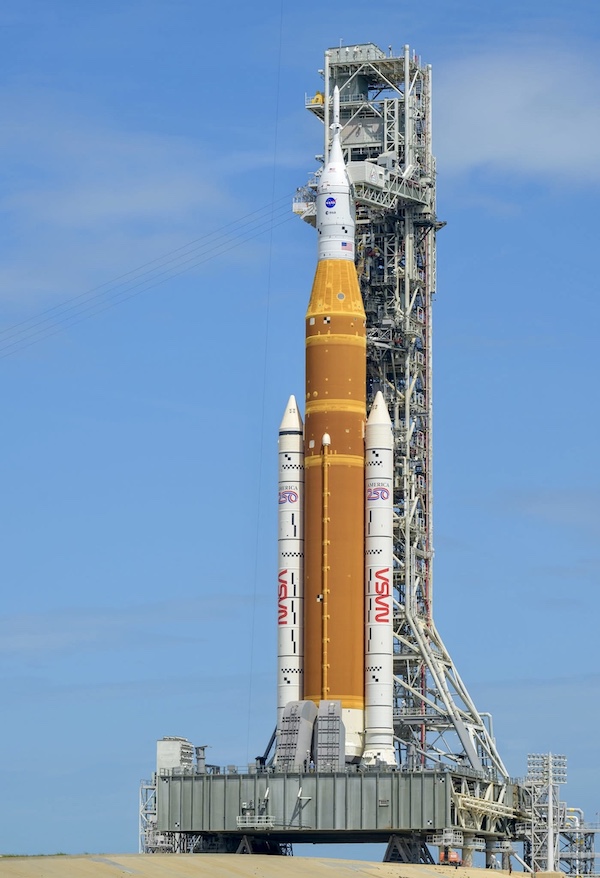
Here’s a closer look at the Space Launch System (SLS)—the most powerful rocket ever built for human spaceflight.
📏 SLS Rocket Size & Weight (It’s Massive)
- 📐 Total Height: 322 feet (98 meters) — taller than the Statue of Liberty
- ⚖️ Fueled Weight: 5.74 million pounds
- ⚖️ Unfueled Weight: 3.5 million pounds
👉 This isn’t just a rocket—it’s essentially a flying skyscraper designed for deep space.
🧱 Core Stage (The Backbone of the Rocket)
Built by Boeing, the core stage is the tallest rocket stage NASA has ever constructed.
- 📏 Height: 212 feet
- 📏 Diameter: 27.6 feet
- ⛽ Fuel Capacity:
- 537,000 gallons of liquid hydrogen
- 196,000 gallons of liquid oxygen
- 🔥 Burn Time: 8 minutes
- 🚀 Speed Achieved: Nearly Mach 23 (17,600 MPH)
👉 This stage alone holds over 2 million pounds of propellant.
🚀 Solid Rocket Boosters (Raw Power at Liftoff)
These two boosters provide the majority of thrust at launch.
- 📏 Height (each): 177 feet
- ⚖️ Loaded Weight (each): 1.6 million pounds
- 🔥 Burn Time: 2 minutes
- 💥 Thrust Contribution: 75% of total liftoff power
👉 Once ignited, they cannot be turned off—commitment at its finest.
🧊 Upper Stage (ICPS – Precision in Space)
After the main boost, the Interim Cryogenic Propulsion Stage (ICPS) takes over.
- 📏 Height: 45 feet
- ⚖️ Fueled Weight: 72,000 pounds
- 🎯 Purpose: Precise push toward the Moon (Translunar Injection)
💥 Total Power: Why Artemis II Is So Strong
The SLS rocket delivers record-breaking performance:
- 💥 Maximum Thrust: 8.8 million pounds-force
- 📈 More Powerful than Saturn V: +15%
- 🛰️ Payload to Orbit: 95 metric tons
- 🌕 Payload to Moon: 27 metric tons
🔧 Engine Breakdown
🛠️ Core Stage (4 RS-25 Engines)
- — 418,000 pounds thrust each
- — Up to 512,000 pounds at full power
- — Total: 2 million pounds of thrust
🚀 Solid Rocket Boosters (2 total)
- — 3.3–3.6 million pounds thrust each
🧊 Upper Stage Engine (RL10)
- — 24,750 pounds thrust
👉 Combined, this system makes Artemis II the most powerful operational rocket for crewed deep-space missions today.
🧑🚀 Orion Spacecraft: The Crew’s Ride
Sitting on top of this massive rocket is the Orion spacecraft, designed for deep space missions.
- 🧑🚀 Crew Capacity: 4 astronauts
- 📦 Habitable Volume: 316 cubic feet
- ⚖️ Total Mass: 58,000+ pounds
🔌 European Service Module (ESA)
Provides:
- ⚡ Power
- 💧 Water
- 🌬️ Oxygen
- ❄️ Thermal control
- 🚀 Propulsion
🚨 Launch Abort System
- Built for safety
- Can pull the crew away instantly in an emergency
🆚 Artemis II vs. Saturn V (A Fun Comparison)
- 🚀 More Thrust: Artemis II (+15%)
- 📏 Height: Slightly shorter, but more efficient
- 🧠 Technology: Modern avionics + improved safety systems
- 🌕 Capability: Sends crew directly to the Moon—no assembly required
👉 Think of it as Apollo-era power with modern aviation-level precision and safety.
🚀 Why This Mission Matters (Fun Aviation Fact!)
Here’s your fun aviation fact:
👉 The last time humans traveled beyond low Earth orbit was 1972.
That means Artemis II is not just another mission—it’s the return of deep-space human flight after more than half a century.
Even more exciting:
- The spacecraft will follow a “free-return trajectory”, looping around the Moon and safely returning to Earth
- The Orion capsule will re-enter Earth’s atmosphere at — 25,000 MPH
🛰️ From Aviation to Space: Why This Matters to Pilots
At US Aviation Agency, we love highlighting how aviation and space exploration are deeply connected.
Both require:
- Precision navigation
- Strict regulatory compliance
- Real-time communication systems
- Highly trained professionals operating in complex environments
Whether you’re flying internationally or traveling to the Moon, compliance and communication are mission-critical.
🌍 A New Era of Exploration
Artemis II is just the beginning.
NASA’s Artemis program aims to:
- Return humans to the Moon
- Establish a long-term lunar presence
- Prepare for future missions to Mars
This mission is the bridge between historic aviation achievements and the future of space travel.
✈️ Final Thoughts
Moments like this remind us why aviation—and exploration—matter.
From the Wright Brothers to lunar missions, progress happens when people push boundaries.
👉 So take a moment, watch history unfold, and enjoy the launch.
🎥 Watch Our Team’s Footage from Florida
We captured this footage of the Artemis II launch from Daytona Beach, Florida as NASA began this historic mission.
This perspective captures the sheer power and significance of the launch—from the moment it rose above the treeline to the dramatic separation of the two solid rocket boosters from NASA’s Artemis II SLS core stage.
Watch below for a closer look at the moment humans returned to deep space.
🚀 FLY SMART AND STAY COMPLIANT 🚀
—The US Aviation Agency Team
👉 Ready to Stay FAA Compliant While Living Abroad?
Get your FAA-compliant U.S. address today:
#NASA #Aviation #Flying #Pilot