

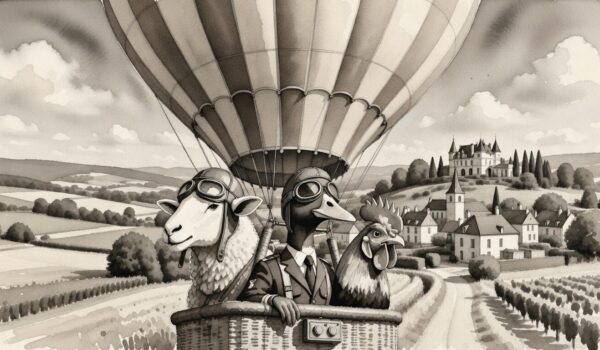
Did you know that long before humans soared through the skies, the pioneers of aviation sent a very unusual crew aloft to test the unknown? The aircrew were the first animal aviators!
On September 19, 1783, at the grand Palace of Versailles in France, the Montgolfier brothers—Joseph-Michel and Jacques-Étienne—launched what would become one of the most famous demonstrations in aviation history. Their hot air balloon, known as the Aérostat Réveillon, carried the very first living passengers ever to fly in a man-made aircraft: a sheep, a duck, and a rooster (often called a cockerel). 🐑🦆🐓
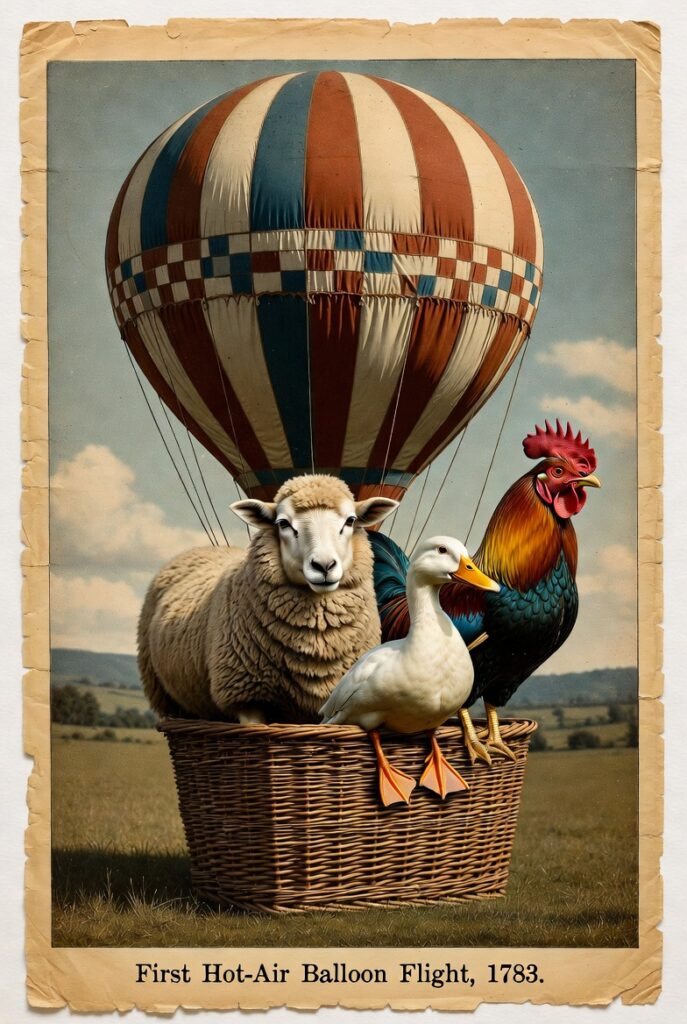
Why these animals? It wasn’t random! Scientists and the inventors were unsure about the effects of high altitude on living beings—would the air be breathable? Would pressure changes cause harm? King Louis XVI reportedly suggested sending condemned criminals, but the Montgolfiers opted for a safer (and more humane) test.
- The sheep (named Montauciel, meaning “Climb to the Sky”) was chosen because its physiology was thought to resemble a human’s most closely.
- The duck, a natural high-flyer, served as a control to show the effects of altitude versus the balloon itself.
- The rooster, a bird that stays closer to the ground, provided another comparison point.
The balloon rose dramatically amid cannon blasts, cheers from a massive crowd (including King Louis XVI, Queen Marie Antoinette, and over 130,000 spectators), and ascended to about 1,500 feet. It floated for roughly 8–15 minutes before landing safely about 2 miles away in a wooded area. When rescuers arrived, all three animals were alive and unharmed—proving that flight was survivable!
The trio was hailed as “heroes of the air” and rewarded with a cozy spot in the royal menagerie at Versailles. This successful test paved the way for the first human flight just two months later, on November 21, 1783, when Pilâtre de Rozier and the Marquis d’Arlandes took to the skies over Paris.
This quirky milestone reminds us how aviation began—with curiosity, bold experimentation, and a touch of whimsy. From animal “test pilots” in 1783 to today’s rigorous safety standards and FAA regulations that keep every flight secure, we’ve come an incredible distance.
What do you think—would you have volunteered as one of the first human passengers back then? Share your thoughts in the comments, and stay tuned for more Fun Aviation Facts!
Safe skies ahead—and may your landings always equal your takeoffs!
—The US Aviation Agency Team
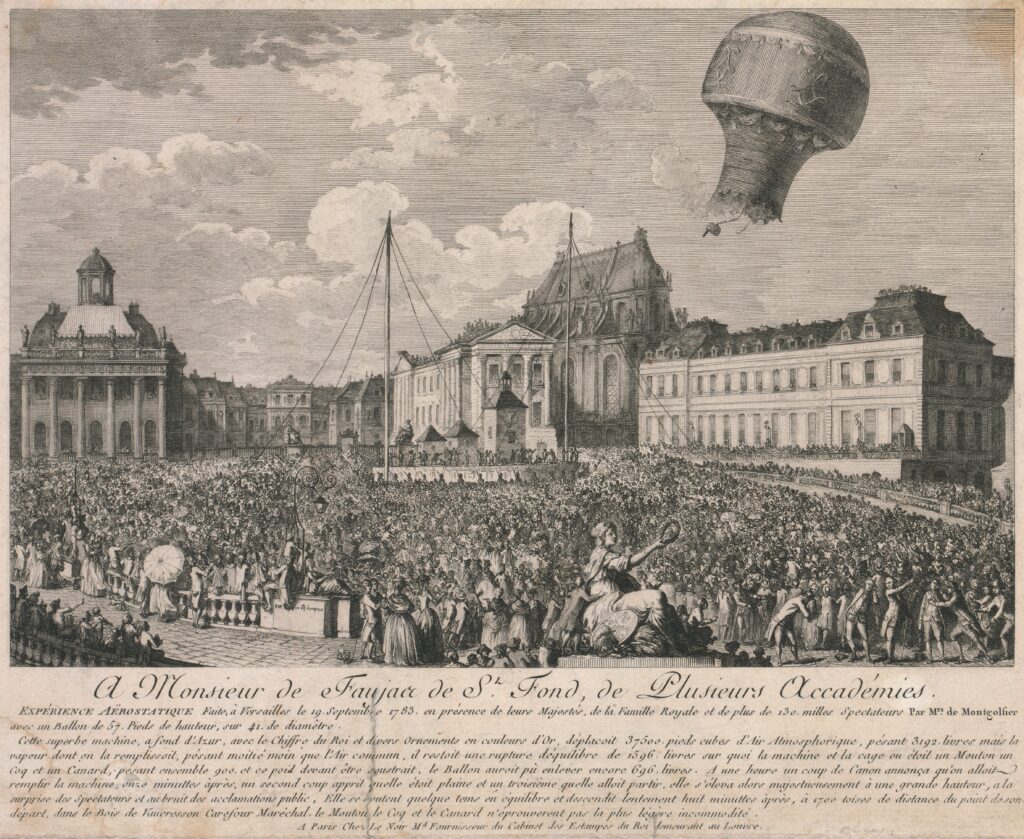
Historical engraving of the 1783 Versailles launch, showing the massive crowd and the balloon ascending with its animal passengers. Public domain image courtesy of Wikimedia Commons / Library of Congress-style collections.
#AviationHistory #FunFacts #FirstFlight #HotAirBalloon #MontgolfierBrothers